
Start an Aurora Residents Directory Search
The first question is not which website has the most names. It is what fact needs proof. Aurora property systems connect parcels with taxpayers and recorded owners. Election tools can confirm an eligible person's registration and district information. Court indexes identify parties and case activity. The library's directories place a household at an address in a particular year. Each is useful because its purpose, keeper, and limits are known.
Jurisdiction comes before the search. Aurora occupies Kane, DuPage, Kendall, and Will counties, and the right recorder, assessor, clerk, and circuit court change with the address or event. A postal city or ZIP is not enough to choose the office. Begin with Aurora MyPlace or a county parcel map, record the county and parcel identification number, and then follow the branch that matches the question.
- For an address, identify its county and parcel in Aurora MyPlace or the county assessor system.
- For a name, define the record sought and search the relevant official index with spelling variants.
- Compare the result's date, role, street, parcel number, or case number with one independent source.
- For an older household, move to Aurora Public Library District directories, newspapers, and obituary citations.
- When an index is absent or incomplete, use the office counter, mail route, telephone contact, or an Illinois FOIA request.
Four-County Offices Behind Aurora Resident Rolls
Aurora has no single county office that covers every resident record. Kane County handles much of the city, but an address in the DuPage, Kendall, or Will part must go to that county's office. Recorders preserve deeds and other land instruments. Assessors maintain parcel and tax context. County clerks handle local vital and election records, while circuit clerks keep trial-court files. The city itself supplies municipal documents through its clerk, Police Records Division, and FOIA route.
Kane County Elections
719 S Batavia Avenue, Building B
Geneva, IL 60134
630-232-5990
The cards are a Kane-centered starting point, not a claim of citywide coverage. Verify the parcel or event county before contacting an office. The Aurora street directory gives the full address-to-county workflow for all four systems.
Aurora MyPlace Chooses the Right Records Branch
The city's Aurora MyPlace GIS is the best orientation tool because it places an address against city, county, ward, ZIP, school, library, park, and nearby service layers. That context prevents a common Aurora error: sending a DuPage parcel to Kane simply because Kane contains most of the city. MyPlace is a map and civic locator, not proof of occupancy or title.
After the county is known, the local assessor supplies the PIN and tax record, the recorder supplies the instrument trail, and the proper clerk supplies election or vital-record routes. City ZIP and neighborhood maps are helpful overlays, but they do not replace parcel geometry, county boundaries, or USPS delivery data.
Property Names in the Aurora Residents Directory
Property research is often the strongest address starting point. Kane DevNet accepts PIN, owner, address, and advanced tax or sales criteria, with tax data back to 2004. DuPage Property Lookup accepts PIN, address, billing name, and map routes. Kendall DevNet offers parcel, owner, address, sales, tax-code, district, and legal-description searches. Will County's Supervisor of Assessments offers PIN, address, sale, subdivision, owner, and property-class modes.
| County portal | Useful inputs | Result to retain | Key caution |
|---|---|---|---|
| Kane DevNet | Owner, address, PIN | Parcel and tax context | Taxpayer is not necessarily occupant |
| DuPage Property Lookup | PIN, address, billing name | Situs, map, conveyance clue | Confirm title in recorder index |
| Kendall DevNet | Owner, address, sales, legal description | Parcel, district, sale data | Recorder research may require office contact |
| Will assessment search | PIN, address, owner, subdivision | Assessment and parcel detail | Use recorder for recorded interest |
An assessment name, mailing address, and situs address are three different fields. Treat the portal as evidence of a property relationship on a stated tax year, then inspect the recorder's latest deed when ownership itself matters.
The Kane property search illustrates the assessor route used by many Aurora addresses.
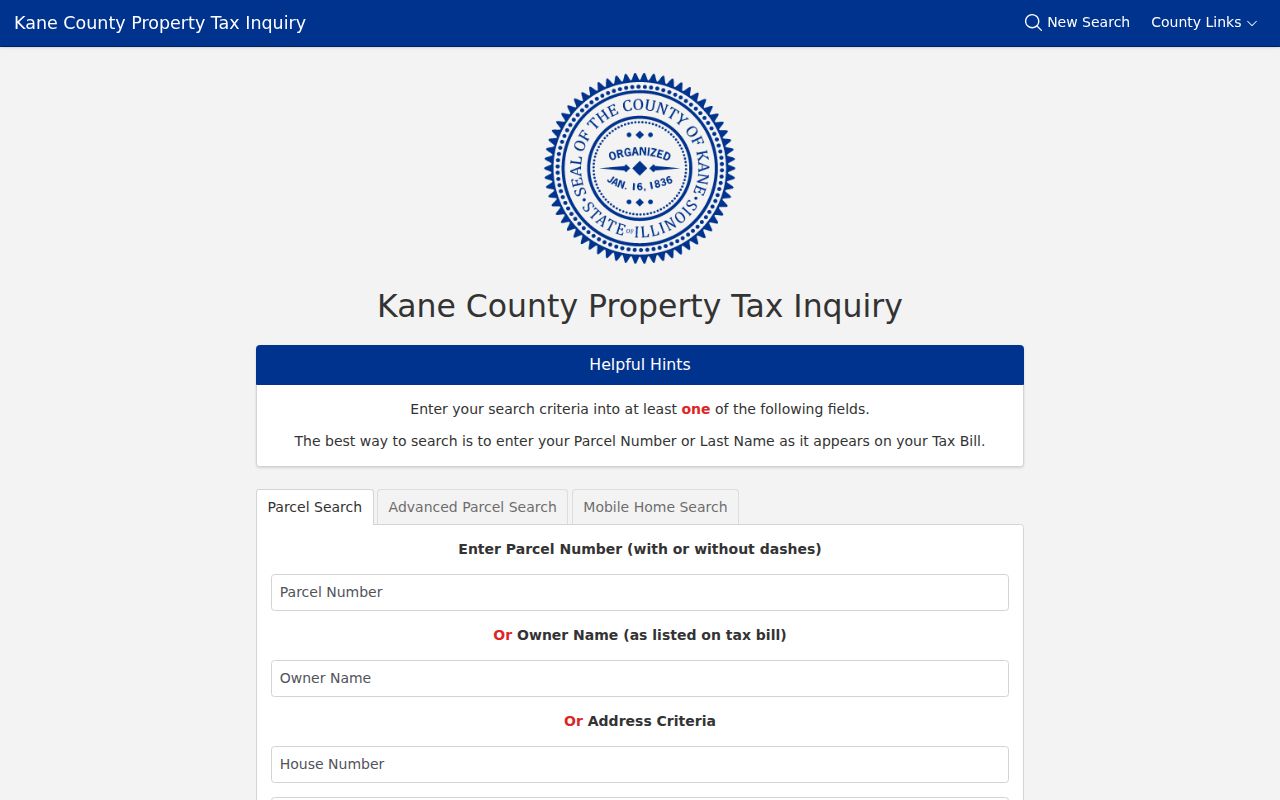
Its name, address, and PIN paths show why a parcel search is more precise than treating a general directory result as proof of residence.
What Current Aurora Resident Sources Confirm
Modern public systems resemble directories only in narrow ways. They list a person because that person owns property, registered to vote, appears in a public case, holds a credential, represents a business, or has another recorded role. The date and role are part of the result. None of these sources promises a complete roster of current Aurora households.
| Official source | Recorded connection | Responsible keeper | Public route |
|---|---|---|---|
| County parcel roll | Taxpayer or owner association | County assessor | Free county portal |
| Voter-status lookup | Registration and election details | State or election authority | Identity-matching form |
| Recorder index | Party to deed or instrument | County recorder | Online index or office research |
| Court index | Party and case role | County circuit clerk | Portal, clerk request, or courthouse |
| Credential or entity file | Professional or business affiliation | IDFPR or Illinois Secretary of State | Official state search |
| Historic directory | Named household in a publication year | Library or historical society | Library, appointment, or limited web copy |
Choose the row that matches the claim. For a one-name investigation, the Aurora resident lookup explains how to compare dates, roles, and independent identifiers without merging different people.
Aurora Voter Checks Are Confirmation Tools
The Illinois Online Voter Registration Status Lookup asks for first name, last name, birth date, and five-digit ZIP, followed by street number and street name. Kane County provides a separate form using last name with either house number or street name. Returned information can confirm registration, polling place, precinct, districts, and a sample ballot, but the forms are not open resident lists.
| State form field | Stage | How it is used |
|---|---|---|
| First and last name | First | Identity match, including careful spelling |
| Birth date | First | Private matching input, not a fact to republish |
| Five-digit ZIP | First | Narrows the election jurisdiction |
| Street number and name | Second | Confirms the registration address match |
Illinois statutes restrict dissemination and commercial use of voter data. Address Confidentiality Program participants and household members can be excluded or redacted. A failed lookup may reflect spelling, a recent move, timing, county choice, or a protected record rather than a firm conclusion about the person.
Aurora Court Names Need a Case Number
Aurora court searches also split by county. Kane's portal offers Smart Search and Advanced Search for public case information. DuPage, Kendall, and Will circuit clerks maintain their own access routes, and the courthouse or clerk remains the source for copies and records not exposed online. Statewide re:SearchIL has expanded remote access to nonconfidential documents in newer cases since May 1, 2025, while federal filings use PACER.
A name hit proves only that the indexed name appears in a stated case and role. Save the court, case number, party role, filing date, status, and docket entry before comparing it with an address or another record. Common names, sealed files, impounded material, juvenile restrictions, and older paper holdings all limit what a public search can establish.
The Kane Circuit Clerk portal is one official Aurora-area case route.
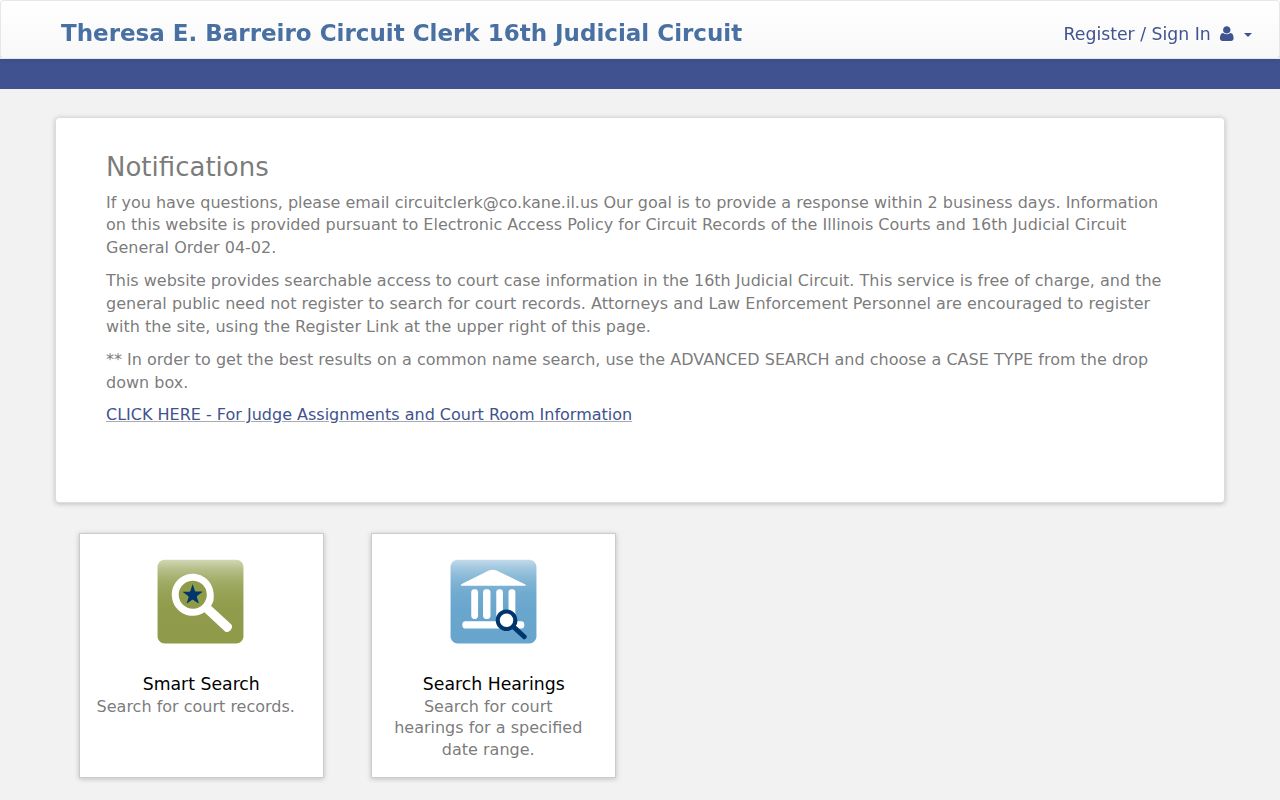
The portal image reinforces the proper workflow: filter a public index, then rely on the clerk and case record for authoritative context.
Aurora Vital Records Follow the Event County
Birth, death, and marriage records follow the county or agency holding the event, not simply a current Aurora address. County clerks issue local certificates where held. The Kane County Clerk operates an Aurora vital-record office at 5 E Downer Place, Suite F. The Illinois Department of Public Health issues birth and death certificates under eligibility rules and provides marriage or civil-union verifications, while certified marriage records come from county clerks.
Current certificates remain restricted to eligible requesters. Historical access changes by age and record type under the Illinois Vital Records Act. Records at least 100 years old for births, 50 years for deaths, and 75 years for marriages can enter inspection routes through the State Archives, IRAD, or approved libraries. Genealogical-copy rules use separate statutory thresholds and procedures. Pre-1916 indexes are generally county or local holdings.
The Illinois vital records hub separates these certificate and verification routes.
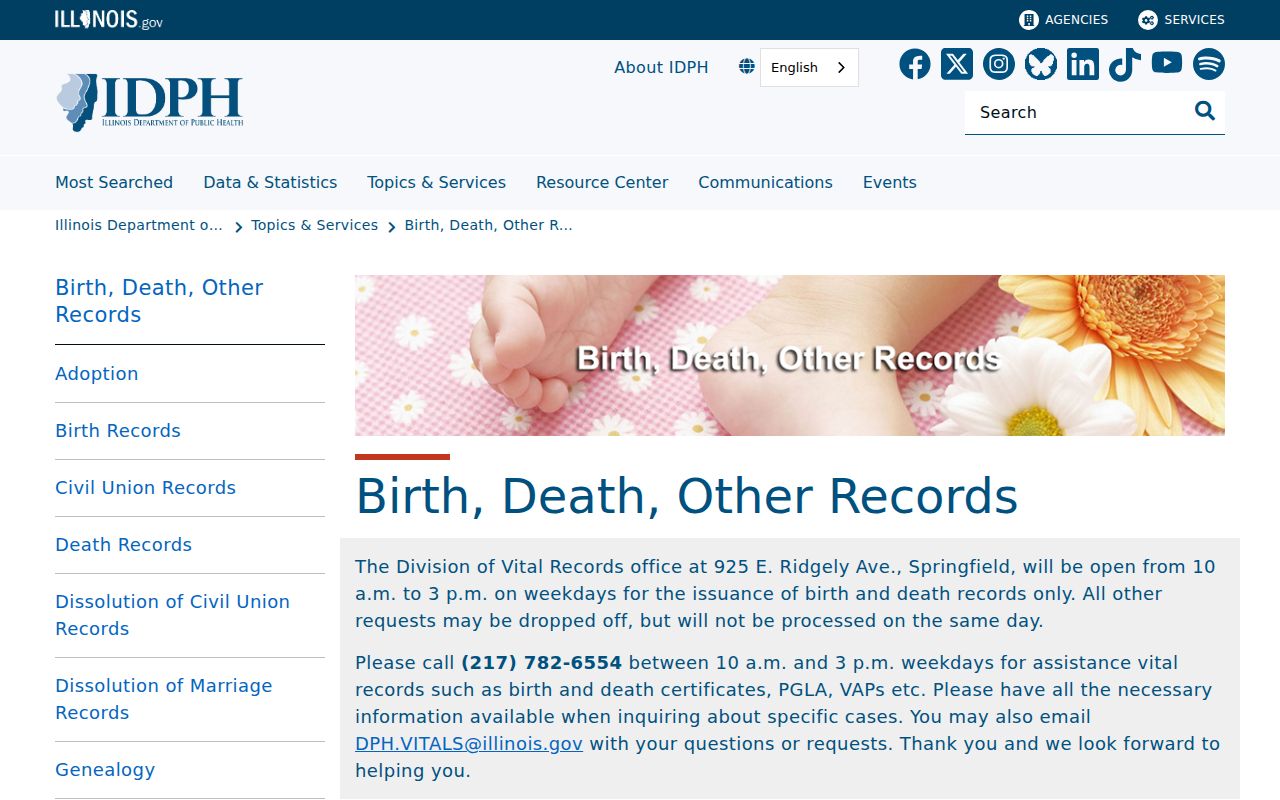
That separation matters because a public index clue does not remove identification, relationship, fee, or eligibility requirements for a certificate.
Public Safety Rolls Cover Specific Aurora Statuses
Kane County's Detainee Search supports alphabet browsing, name and date fields, and recent custody filters. It warns that information can be incomplete or inaccurate and that fingerprint comparison is the confirmation method. DuPage and Will official pages provide facility contacts, but the research did not locate stable public rosters for those counties. Illinois Department of Corrections covers state custody, and VINE supplies free, confidential custody or case notifications.
The Illinois State Police registry can be searched by name, birth date, city, ZIP, county, status, location status, and offender category. ISP says it updates daily. A registry marker is a record location, not proof that someone is physically present at that address. Use these systems for the status they publish, note the retrieval date, and do not turn a narrow public-safety record into a broader claim about a person's life.
The Illinois State Police registry disclaimer and search states the conditions before access.
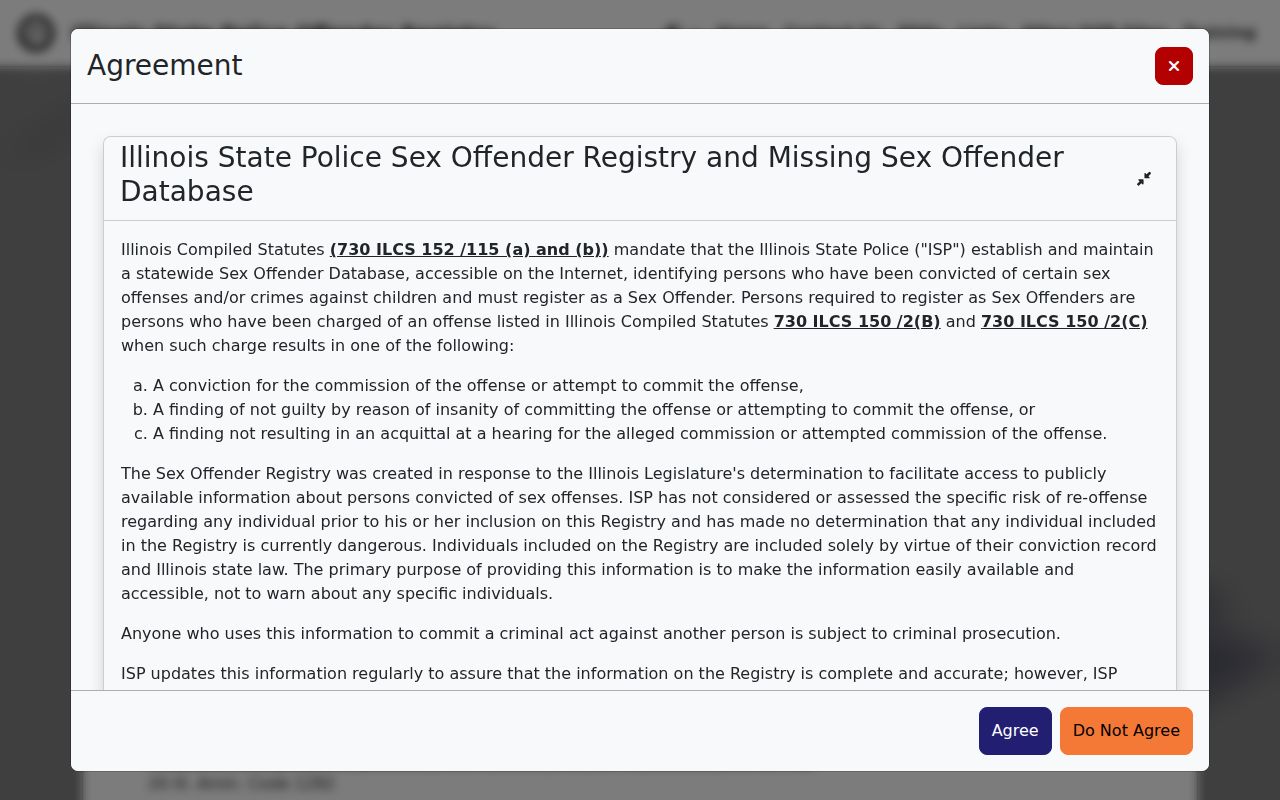
The required disclaimer is part of the result's context and should remain attached to any carefully limited finding.
Illinois Credentials Add an Aurora Affiliation
Some searches seek an official affiliation rather than a home. The Illinois Department of Financial and Professional Regulation lookup accepts credential type, status, number, name, city, state, county, and ZIP, with a CAPTCHA. The Illinois Secretary of State Business Entity Search accepts business name, registered agent, officer or manager roles, file number, keyword, and partial-word searches. Both describe the public role shown in their files.
A credential result can establish a license number and recorded status. A business record can establish an entity and named agent or officer. Neither should be stretched into a current residence claim. Record the exact entity or credential name, identifier, status, and retrieval date, then use another official source if an address connection is relevant.
The IDFPR License Lookup supplies the state credential route.
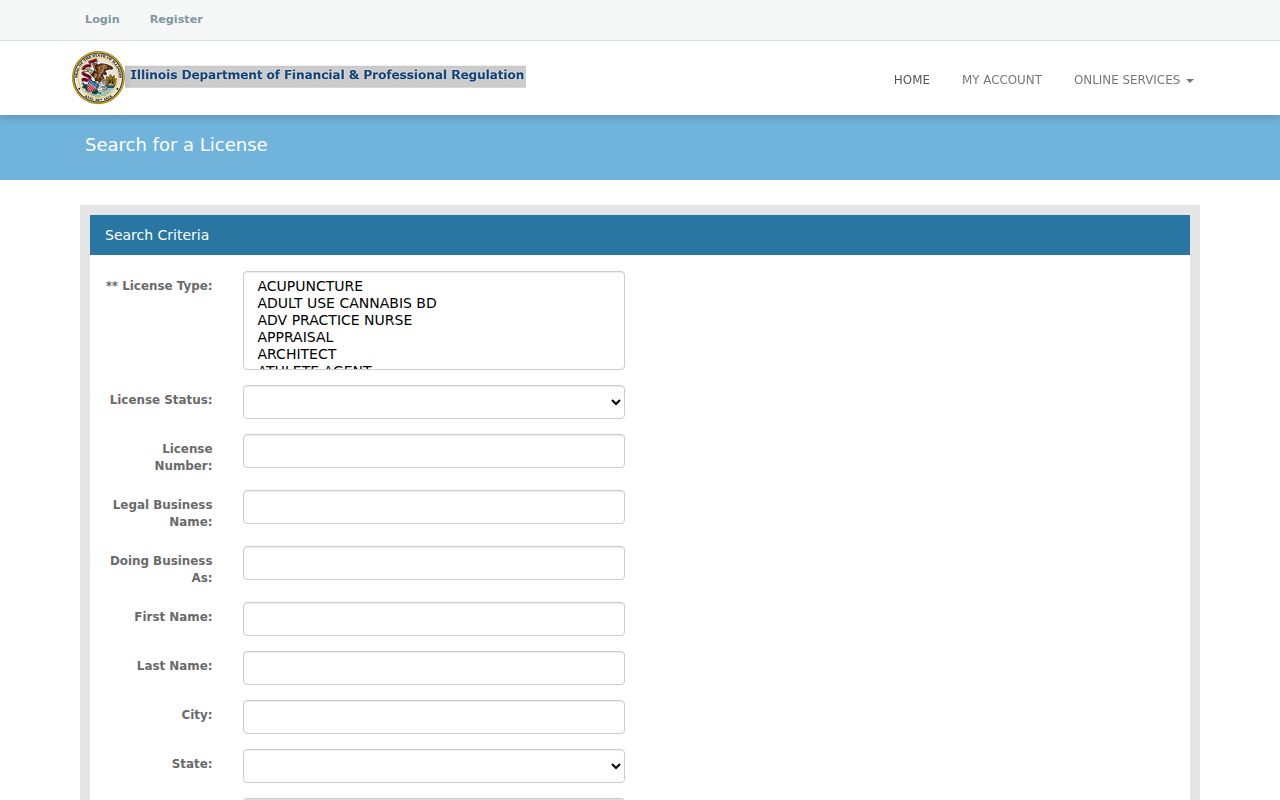
Its city, county, ZIP, status, and credential filters are designed to narrow professional records, not to enumerate Aurora households.
Illinois FOIA Fills Aurora Record Gaps
When a city record exists but has no public index, the Aurora public-record request page routes requests through the responsible department and GovQA. Illinois FOIA, 5 ILCS 140/1 et seq., generally gives a public body five business days to respond, subject to statutory extensions and special rules for commercial or voluminous requests. The common copy rule makes the first 50 black-and-white pages free and permits $0.15 per page after that.
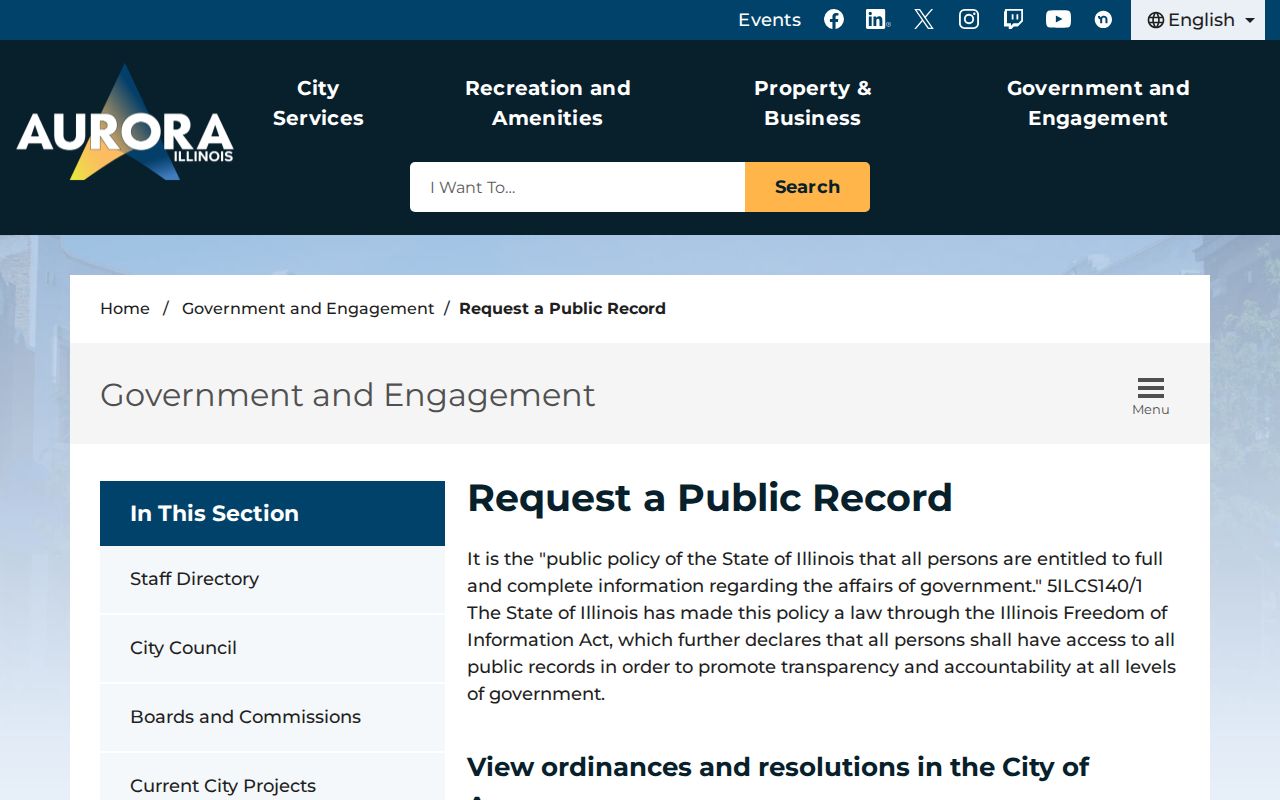
The city's routing page helps direct a request, but it does not override exemptions or turn a question into a record the city never created.
Write for an identifiable record, date range, office, and format. Aurora Police reports other than crash reports follow the city's FOIA path; the Police Records Division separately provides counter and copy services at 1200 E Indian Trail, weekdays from 8 a.m. to 4 p.m., at 630-256-5720. County and state records must go to their own custodians.
Official Aurora Rolls Versus Commercial Indexes
Official systems are fragmented, but that fragmentation carries useful meaning. A recorder result has an instrument and filing date. A voter check answers a registration question. A library volume fixes an entry to a publication year. Commercial people-finder categories may merge scraped sources, suppress dates, or place old and new addresses together without showing which custodian can correct the source.
Official route: slower and split among offices, yet tied to a defined public purpose, jurisdiction, date, and correction path.
Commercial category: convenient for broad leads, yet not authoritative and often unclear about source age, matching logic, or completeness.
Use broad results only as clues. Return to the custodian for the actual claim. Property Watch from the Kane County Recorder is a good example of a precise official service: enrollment is free and sends alerts when a document records against a monitored property, but it is not a guarantee against fraud or a paid title promise.
Lawful use. Search public records for family history, civic research, estate questions, scam avoidance, or other lawful personal needs. Never use an address or identity clue to stalk, harass, threaten, or repeatedly contact a person.
Aurora Residents Directory Shelves Through Time
Aurora Public Library District preserves the city's strongest historical resident trail. Its community-history resources include city directories from 1858 and 1859 forward, reverse address sections beginning in 1895/96, newspapers, yearbooks, cemetery indexes, and a Beacon Obituary Index with more than 113,000 searchable citations. An old listing can place a named person, occupation, spouse, or address in one publication year, but it should be compared with the next directory, a census, obituary, deed, or other dated source.
Aurora's fall-1928 street renumbering can make a correct earlier household appear to vanish. The library's 1929 old-and-new address conversion index bridges that break before a researcher returns to older directories, Sanborn maps, or recorder descriptions. The Aurora Historical Society adds directories, maps, photographs, probate inventories, and research by appointment. No complete official digitized directory run was located, so library shelves, staff help, microfilm, and society appointments remain real access channels.
This historical material is summarized here because it answers who appeared at an address in a past year. The complete collection runs, entry abbreviations, and tracing method belong to the Aurora city directory section in the main navigation. Together, those sources turn the residents directory from a loose name search into a dated and reproducible research trail.
Kane Custody Status for Aurora Searches
The Kane County Detainee Search offers alphabet browsing, name and date fields, and recent custody filters for Kane-side research.
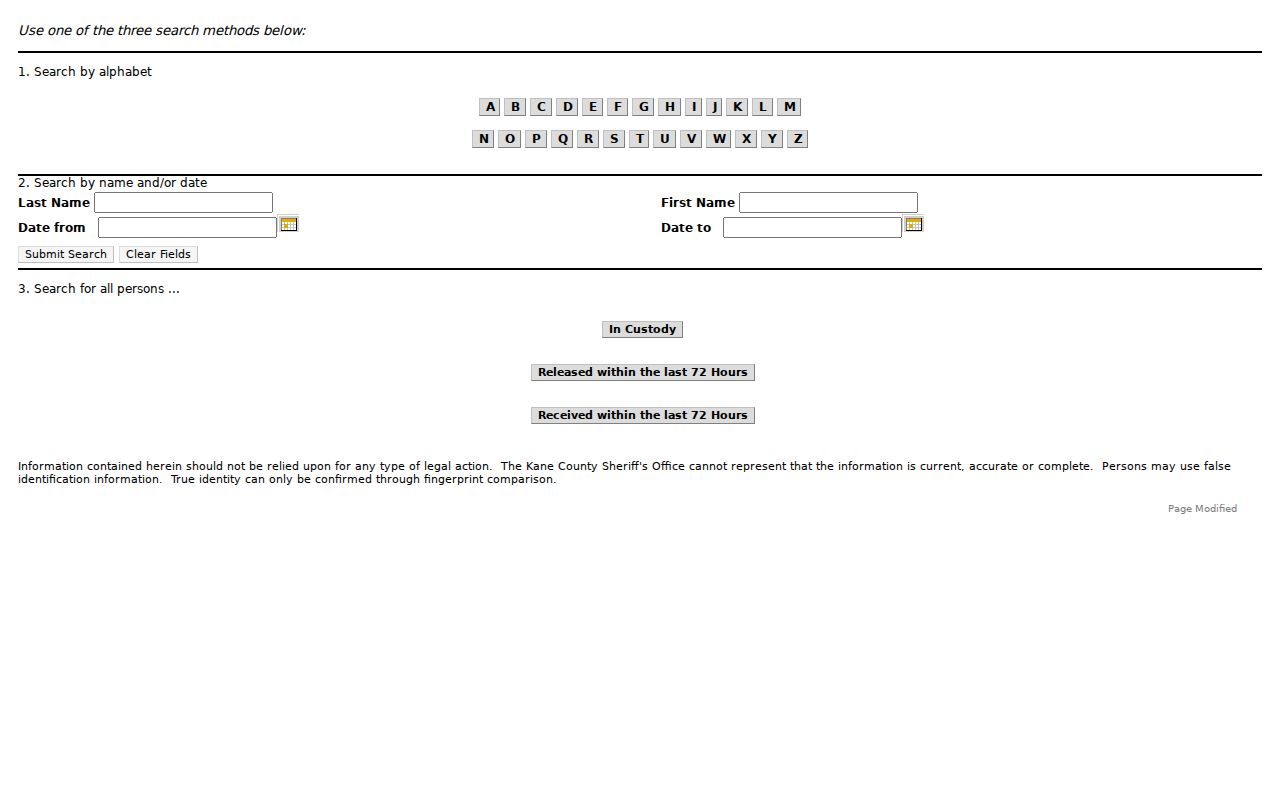
The result is a changing custody record with an official accuracy warning, not a complete history or proof of current Aurora residence.