
Aurora City Directory Shelf
Aurora Public Library District's Emma and Robert Wegman Community History Center is the main shelf. It sits on the second floor of Santori Library at 101 S River Street and can be reached at 630-264-4117. Holdings begin with 1858/1859 directories and continue toward the present with gaps. Many items remain onsite or on microfilm, so the verified access chain includes the room, staff help, linked repositories, and catalog services rather than one complete page-image website.
| Collection | Years | Where Held | Access |
|---|---|---|---|
| Alphabetical Aurora directories | 1858/1859 to present, with gaps | APLD Community History Center | Onsite volumes, microfilm, staff and catalog routes |
| Reverse street sections | Common from 1895/96 forward | APLD city directory volumes | Read by street and house number onsite |
| City Directory & Business Advertiser | 1858/59 | APLD/AHS; FamilySearch catalog lead | Original or catalog access; account limits may apply |
| Polk directory run | 1884 forward in a 1999 holdings survey | APLD collection | Confirm against the current library catalog |
No official fully digitized Aurora city directory run was located. FamilySearch may restrict scans, and a 1999 state survey is only a dated inventory. Call the Community History Center when a needed year does not appear in the catalog.
Aurora's 1858/59 Directory Start
The local run reaches back to the 1858/59 City Directory & Business Advertiser. A transcription of the 1859–60 Kane County directory provides a useful discovery route with names, addresses, and historical descriptions. It should be checked against an original held or identified by APLD or the Aurora Historical Society.
The 1859 Kane County directory transcription shows how this early material can be searched online.
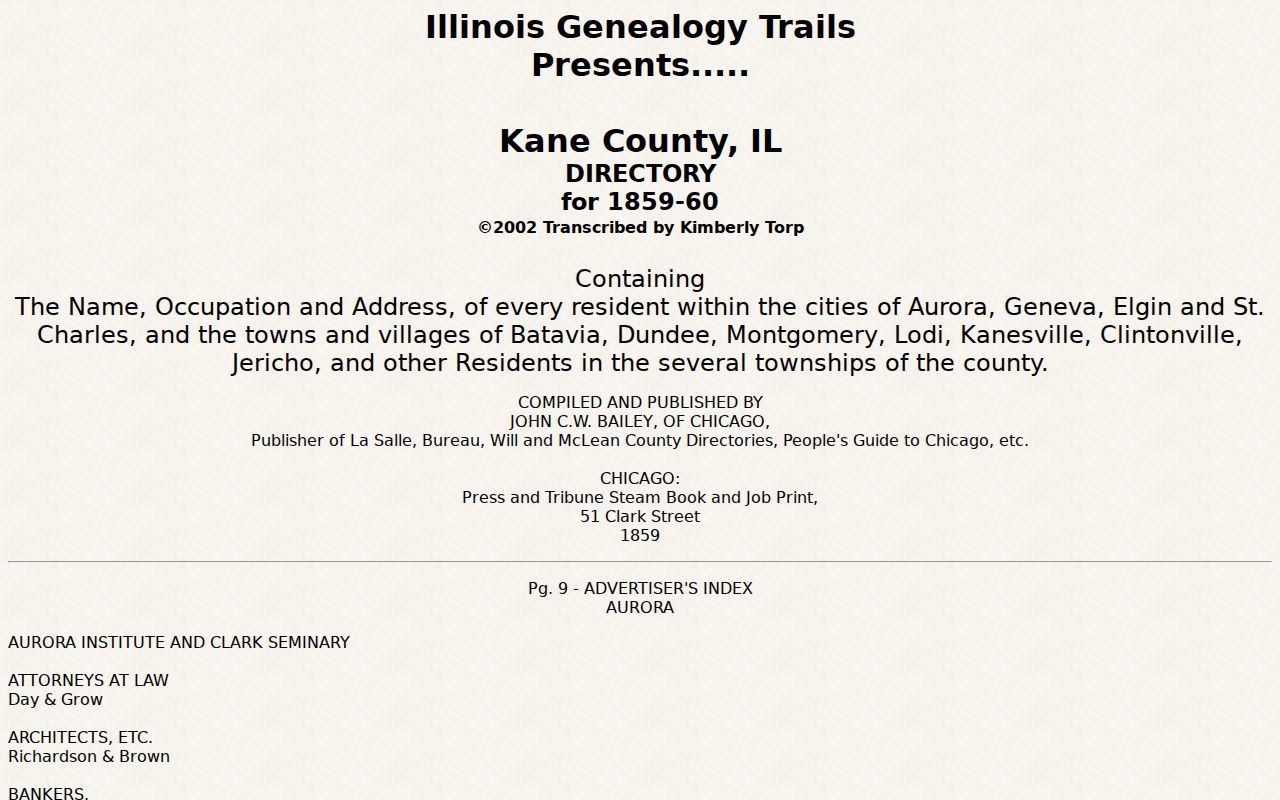
Copy enough citation detail to return to the entry. A transcription can introduce spelling or layout errors, so the original page remains the stronger evidence.
Read an Aurora Directory Entry
Treat a line as a dated index entry. Copy the publication title, publisher, volume year, page, and whether the page is alphabetical or street ordered. Then transcribe the wording as printed, including initials and cross-references. That record can support a historical lead, but it does not state where someone lives now.
| Name | Surname, given name or initials, plus spouse or household notation when printed |
|---|---|
| Historical description | Occupation, business, or office exactly as the volume states it |
| Address | House number, street, room, apartment, or boards notation |
| Cross-reference | “See,” a second address, or a separate business listing |
| Context | Adjacent entries, preface, boundary note, and conversion note |
- Criss-cross directory
- The address-first part of a volume, arranged by street and house number.
- Householder index
- A list centered on people recorded as heads of households rather than every person present.
- Abbreviation key
- The volume's own legend for shortened terms. Save it with the entry instead of guessing.
Aurora City Directories by Street
Many Aurora volumes from 1895/96 forward include a reverse street section. Instead of starting with a surname, open the street, move to the house number, and capture every printed entry there. Then turn to the alphabetical section for initials, spouse notes, business references, and spelling variants.
This is a historical street tool, not a modern household list. Publication and move dates may differ. An entry can omit someone, preserve an old detail, or reflect the person who supplied information. Compare the same address in the year before and after, and label each city directory year in notes.
Aurora's Address Conversion Key
Aurora changed street numbering in fall 1928. APLD's 1929 old/new address conversion bridges modern numbers to earlier city directories. Record both numbers, the street, block, ward, and conversion source. That small step prevents a false gap when an older reverse page uses the former number.
Pair the translation with Aurora Historical Society Sanborn maps for 1885, 1897, 1907, and 1957. A map can show that a structure, lot, or use changed even while a directory retained a name. The legal description in an abstract or deed is often the more durable property key.
Aurora key. Test the 1929 conversion before declaring that a pre-1928 city directory has no entry for a modern address.
Aurora's 113,000 Obituary Leads
APLD's Beacon Obituary Index contains more than 113,000 searchable entries and remains a work in progress. A result supplies a name, date, and page citation. Use that citation to read the actual notice on the library's Beacon and predecessor microfilm, which begins in 1848. The notice may resolve relatives, address clues, or spelling variants left unclear by a city directory.
Subject files add clippings from 1851 forward. Neither an index row nor a folder title proves residence. Save the cited newspaper title, date, page, and wording. Library staff and the local genealogy help session, held on the second Monday from 10:00 to 12:30 per the event page, provide a human fallback when microfilm work stalls.
Aurora Historical Society Records
The Aurora Historical Society adds city directories, Kane probate indexes, Aurora City Court material, cemetery indexes, yearbooks, marriage references, soldiers' files, newspapers, photographs, people files, and genealogies. Research is by appointment. Call 630-897-9029 or the collections contact at 630-906-0650. The stated research fee is $10 per half-hour for members and $12 for nonmembers, with different onsite terms for some visitors, so confirm the current schedule.
The Society collections page explains the appointment and research route.
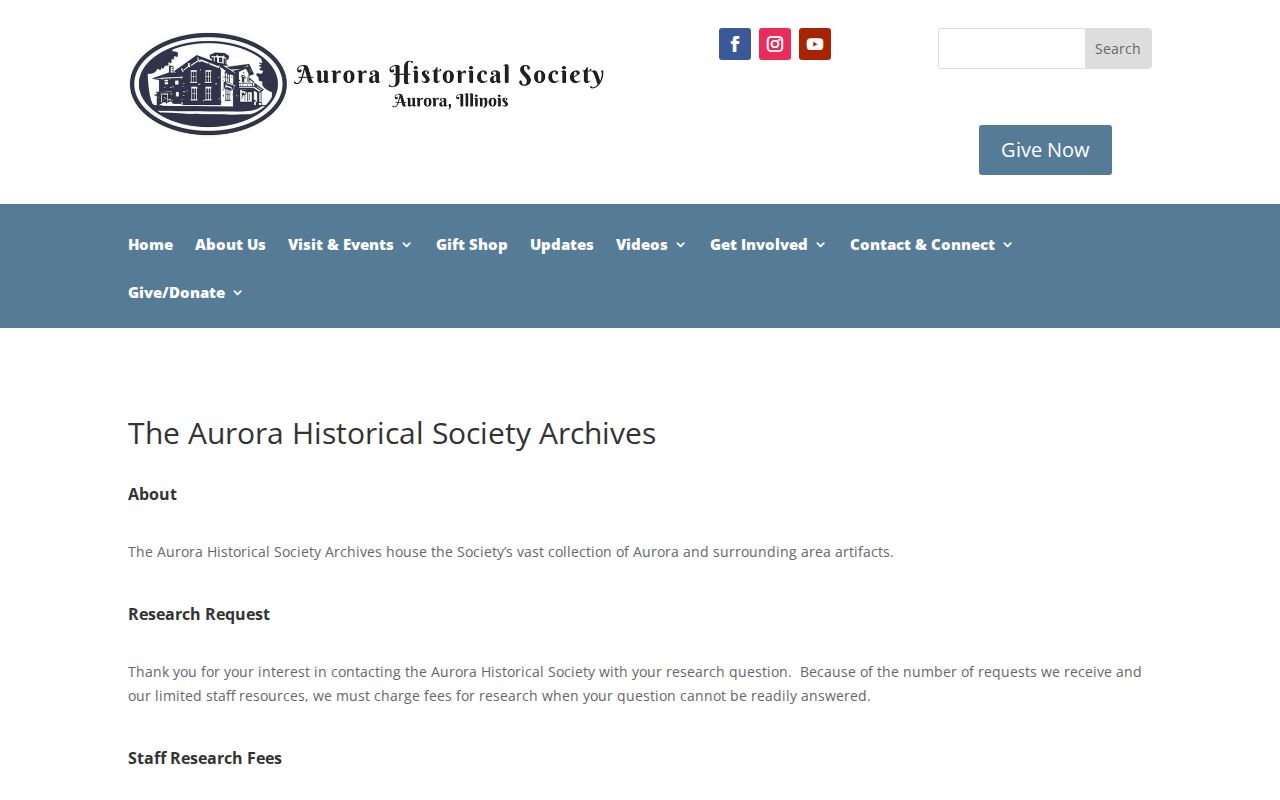
This archive is most useful when a library directory entry needs context from a probate index, image, people file, or dated local article.
Aurora Directory Companion Collections
Yearbooks can distinguish people who share a name. APLD holds East Aurora High School years 1913–2015, West Aurora 1911–2010, Waubonsie 1979–2021, Marmion 1937–2016, Rosary 1967–2016, Aurora College 1913–1980, and Aurora Central Catholic 1969–2021. School affiliation is a dated clue, not proof of current residence.
Cemetery indexes cover East Aurora/Root Street, Marywood Catholic, St Joseph, St Michael, St Nicholas, and Sugar Grove. Historic photographs, ward maps, and local oral-history work add place and personal context. Latino Legacies and Community Voices preserve perspectives that formal indexes may miss, but interview date, consent scope, and speaker wording belong in the citation.
Aurora Directory Research Timeline
The form of an Aurora name-and-address search changes with the era. Use this timeline to choose the right shelf before deciding that a record is absent.
| 1848 | Local newspaper microfilm coverage begins at APLD. |
|---|---|
| 1858/59 | The early City Directory & Business Advertiser marks the directory starting point. |
| 1895/96 | Many volumes add reverse address sections, enabling a street-first search. |
| Fall 1928 | Aurora renumbers addresses; the 1929 conversion links old and new forms. |
| Modern access | Volumes, microfilm, catalog links, society archives, and repository databases remain distributed. |
Kane's 1843 and 1890 courthouse fires explain some missing legal trails. The later fire destroyed 5,000 court files even though volumes survived. Directory gaps, destroyed census material, sealed files, and unindexed holdings are different types of absence. Notes should state the exact source and years searched.
Access Aurora's Directory Originals
A digital catalog result is only the first access channel. The verified local path is to visit or call the Community History Center, ask staff to identify the volume or microfilm reel, and copy the title, year, page, and library locator. Santori Library supplies scanners, computers, and Wi-Fi. Ancestry Library Edition is available in the library, while Heritage Hub covers obituaries and death notices from 1704 to today. FamilySearch may require a free account and may reserve some images for an affiliate location.
The Historical Society is the second local route when a shelf entry needs deeper context. State Archives and IRAD databases form another bridge for record groups outside the city. Illinois Digital Archives holds linked photographs and maps, but research found no official complete page-image run of Aurora directories. Mail or phone contact with the holding institution is therefore part of a full search, not a last resort.
Keep a reproducible note: institution, collection title, publication year, page, call number or reel, access date, and any scan limit. A bare surname copied from a search screen cannot be checked later. If the year is absent, state which catalog and date span were checked before moving to newspapers, census film, society files, or archive indexes.
Trace Family Through Aurora Directories
A city directory can fill years between federal census schedules. Begin with a known name, but search initials and spelling variants too. Follow the entry in both directions and note every address or household change. The 1890 census loss makes Aurora's directory, newspaper, cemetery, and local archive records especially useful.
- Find the first firm surname and address match. Save the title, year, page, and exact line.
- Check adjacent directory years. Record moves, spouse notations, spelling shifts, and disappearances.
- Use reverse pages from 1895/96 forward to see all entries printed at the address.
- Pair directory years with available Kane census microfilm and Illinois state census material.
- Test the result against Beacon notices, the obituary index, cemetery records, yearbooks, or AHS people files.
A disappearance is not a death record. The person may have moved, gone unlisted, changed surname, or fallen in a gap. State Archives and IRAD can bridge a missing local result, while a certified vital record remains subject to its own eligibility rules.
Aurora Library and City Collection Gateways
The Aurora Public Library District Community History page is the current gateway to directories, newspapers, obituary citations, cemeteries, yearbooks, census aids, and staff help.
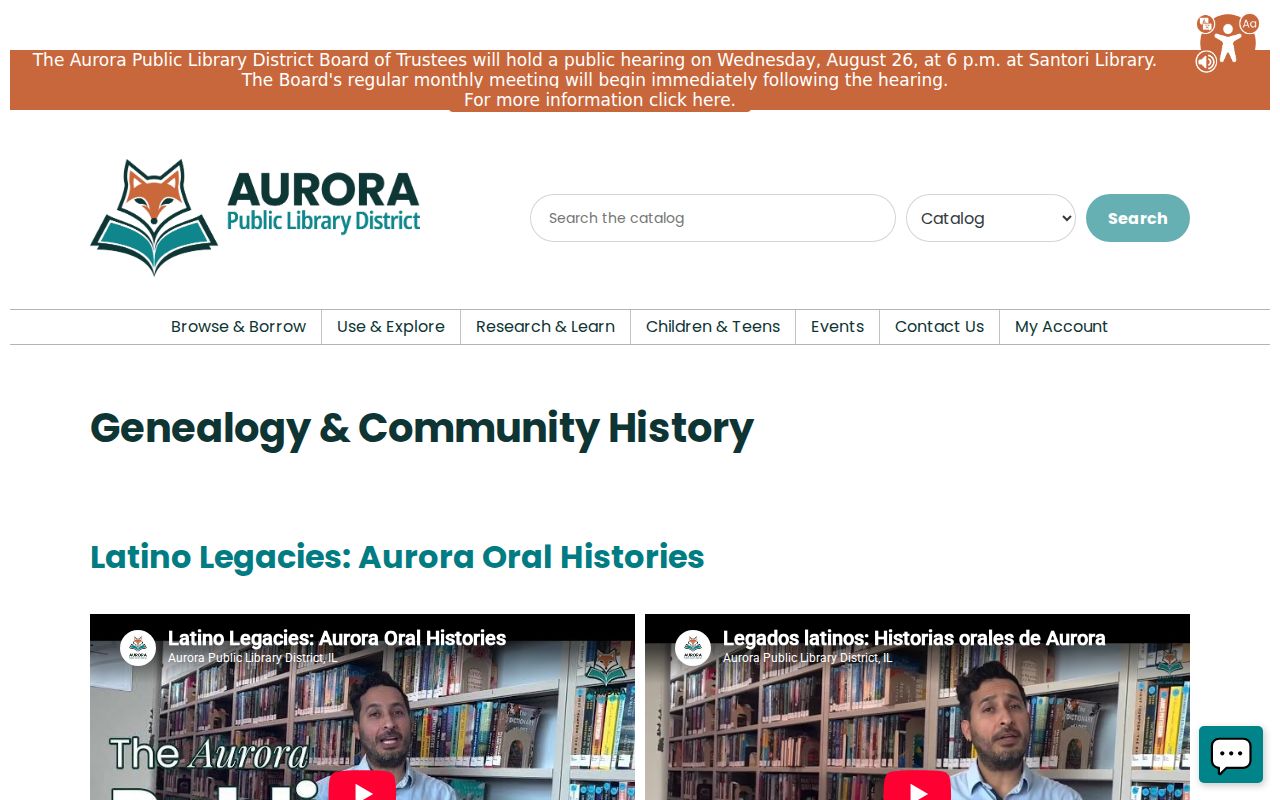
The collection map directs researchers to shelves and databases while preserving the distinction between an index and the cited volume or page.
The City of Aurora also provides an official summary of Aurora Historical Society holdings, including city directories, Sanborn maps, probate inventories, and historical maps.
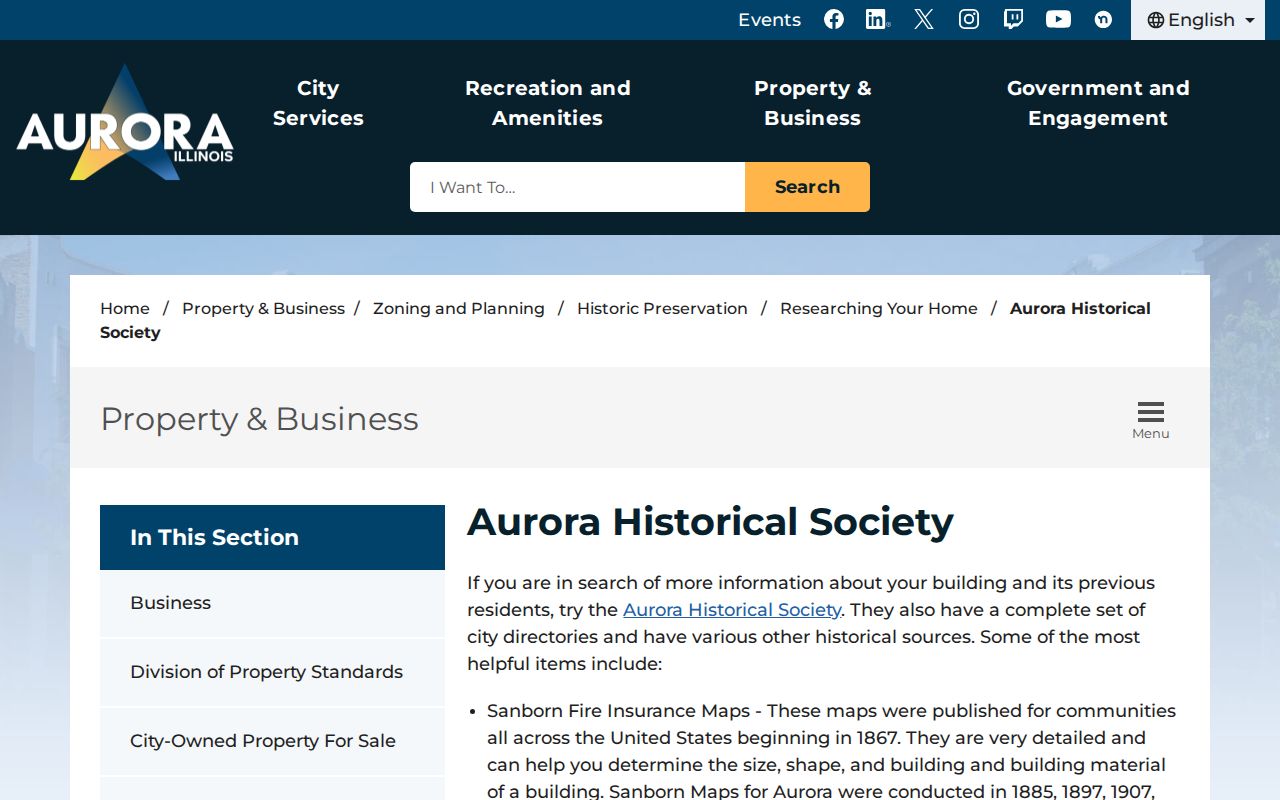
The city summary helps choose the Society route, but appointments, access terms, and research fees should be confirmed on the Society's current collections page.