
Aurora Previous Resident Sources
An Aurora address may fall in Kane, DuPage, Kendall, or Will County. Confirm the county and parcel identification number in MyPlace before choosing an assessor or recorder. Deeds are strongest for legal ownership. Reverse directories, census schedules, newspapers, probate files, and obituaries can identify people who occupied the building.
| Source | Years It Covers | Where Held | What It Shows |
|---|---|---|---|
| Kane recorded documents | 1837 forward | Kane Recorder and LRS | Parties, instruments, dates, legal description |
| DuPage index and images | March 16, 1961 forward | DuPage Recorder | Names, address, PIN, type, date |
| Reverse directories | 1895/96 forward, with gaps | Aurora Public Library District | Householders arranged by address |
| City directories | 1858/59 forward, with gaps | Library and historical collections | Names, spouse, work, address |
| Sanborn maps | 1885, 1897, 1907, 1957 | Aurora Historical Society | Building form, use, nearby lots |
Recent research usually moves from assessor to recorder. Older work may require recorder books, the library’s address conversion, directory volumes, and historical maps. Label a person as owner, taxpayer, or occupant only when the cited source supports that term.
Fix Aurora's 1928 Address Break
Aurora changed many street numbers in fall 1928. A sound search can miss previous residents if it uses only the modern number. Aurora Public Library District holds a 1929 old-and-new address conversion index. Test the present number there before searching an earlier directory, newspaper, or map. Save both numbers, the street, block, ward, and source year.
The conversion pairs well with Aurora Historical Society Sanborn maps. Translate the address, locate the period structure, then compare the closest directory year. This can show whether the same building remained on the lot or whether a later structure inherited the address.
Walk Aurora Deeds Backward
A deed chain follows recorded interests, not every occupant. Start with the current assessor entry, then confirm ownership at the recorder. The latest deed names the grantee, who receives an interest, and the grantor, who transfers it. Its legal description is the durable link when a house number or subdivision label changes.
- Use Aurora MyPlace to confirm the county and PIN, then open the correct assessor record.
- Find the current owner’s acquisition deed and save the document number, date, parties, and legal description.
- Take that deed’s grantor and find how the same party acquired the parcel as grantee.
- Repeat while checking the legal description at every transfer.
- When the web index ends, ask the recorder about office books, images, and copies.
- Grantor and grantee
- The grantor transfers an interest; the grantee receives it.
- Chain of title
- The linked sequence of recorded transfers for one parcel.
- Legal description
- The lot, block, subdivision, or boundary text that identifies land apart from a mailing address.
A mortgage, release, correction, trust, or split may mention the parcel without being a simple sale. Do not force every instrument into one transfer chain.
Kane and DuPage Record Depth
The Kane County Recorder states that records reach back to 1837. LRS supports party, PIN, document, date, and tract searches, though an index hit does not guarantee every old image is online. The office research route remains important.
The DuPage Recorder search offers online index and image coverage from March 16, 1961. Earlier DuPage work moves to office research. Kendall’s recorder office is the documented fallback because no stable public index was located. Will offers office search and a Fidlar index, but the source did not state a firm online start date.
Kane’s tract search can continue the previous-residents trail when a street or party search fails.
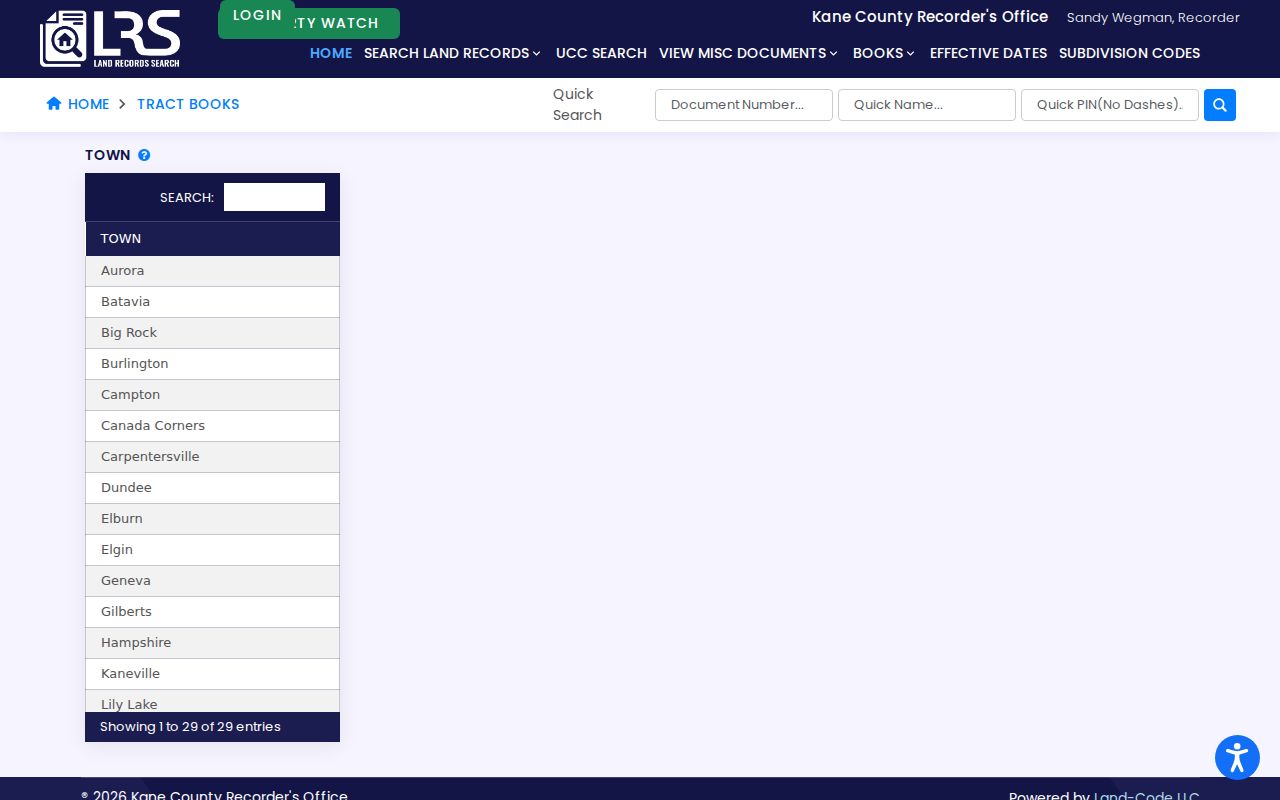
The tract view keeps the work tied to land rather than a shared or misspelled name.
Aurora House History at APLD
The Aurora Public Library District house-history workflow combines abstracts and deeds with former owners, children, neighbors, churches, newspapers, and physical evidence. That method matters because deeds identify legal interests, not everyone who lived in a home.
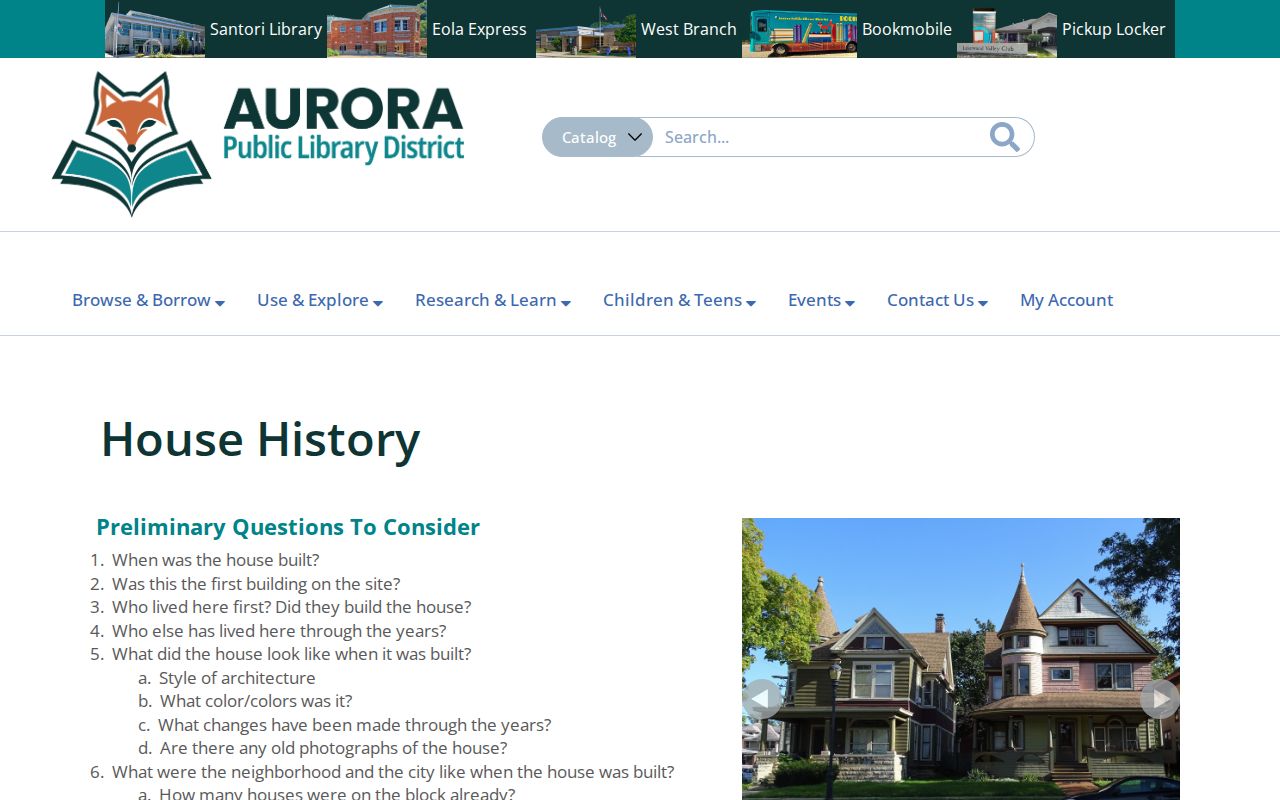
The library route also offers a human handoff when a directory, obituary citation, or microfilm search stalls.
Keep a log with the institution, title or volume, page, document or call number, search date, printed name, and address. APLD invites completed research to be shared with the library, Historical Society, or Preservation Commission.
Aurora Maps Test the Building
Sanborn fire-insurance maps do not name past residents. They show structures and uses. Aurora Historical Society holdings for 1885, 1897, 1907, and 1957 can reveal a changed footprint, outbuilding, business use, or vacant lot. That evidence can explain why an address appears in one directory year but not another.
The city’s historic home research guide stresses legal descriptions and local collection routes.
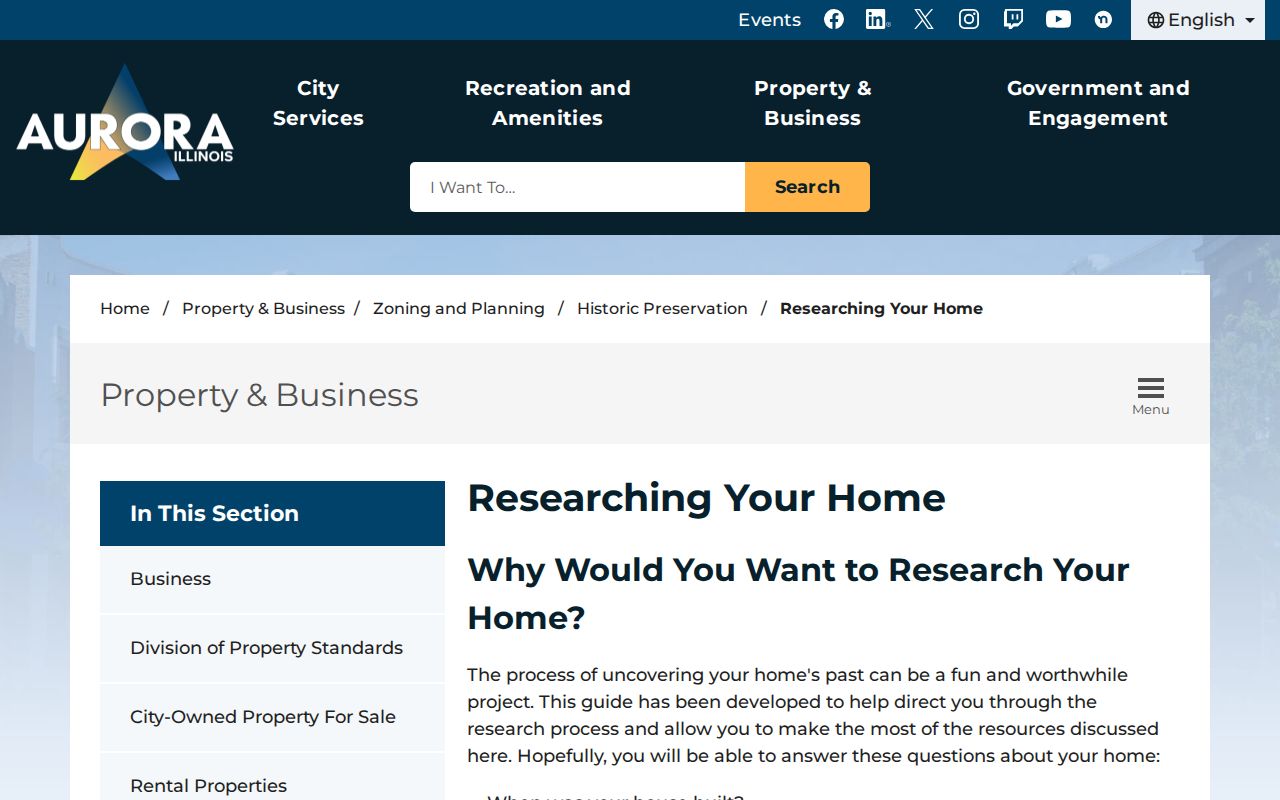
The guide connects a current parcel to maps, abstracts, directories, and files that describe its earlier form.
Aurora Past Household Evidence
Reverse directories from 1895/96 forward can lead from an address to a householder. Name-arranged volumes may add a spouse, occupation, or ownership mark. Census schedules show a household at a dated point, including relatives and boarders. A directory between census years may narrow a move, but it does not prove full-year occupancy.
- Choose the directory closest to a public census year and copy each household name exactly.
- Convert pre-1928 address numbers before judging a mismatch.
- Inspect the census page and nearby households for street context.
- Compare later directories, obituary notices, probate references, and newspapers before assigning a move or death date.
APLD’s Beacon Obituary Index contains more than 113,000 entries with page citations. Read the cited notice. Historical Society probate indexes and people files can add family context, while IRAD bridges old county series. Kane’s 1843 fire and 1890 courthouse fire explain some genuine gaps.
Lawful use. Trace Aurora previous residents for family history, house history, and personal research. Never use a living person’s address to harass, threaten, or repeatedly contact them.
Separate Aurora Owners and Occupants
An assessor may list an owner and tax-mailing address, while the situs address identifies the physical parcel. A recorder identifies parties to documents. None alone proves occupancy. A trust, estate, business, or remote owner may appear in the legal record while a different household appears in a directory.
Write conclusions in source terms: “named as grantee,” “listed as taxpayer,” “shown at the address,” or “enumerated in the household.” That wording keeps previous residents distinct from owners and mail recipients. It also makes conflicting dates easier to resolve.
For the collections themselves, use the Aurora city directory. A backward trail should finish with dated citations, not an unsupported claim about a living person.
Aurora Address Numbers Changed in 1928
A failed pre-1928 address search may be a numbering problem rather than an empty house. Aurora changed street numbers in fall 1928, and Aurora Public Library District keeps a 1929 old-and-new conversion index. Translate the modern number before searching older volumes, then retain both forms with the street, block, ward, and source year.
The reverse sections that begin in 1895/96 can then connect the old address to a listed householder. Pair that entry with a Sanborn map from 1885, 1897, 1907, or 1957 and with the durable legal description. A street number can change, but a subdivision, block, lot, or recorder description may preserve the land identity.
Handle Gaps in Aurora Previous-Resident Records
Not every break can be solved online. Kane IRAD notes that an 1843 fire damaged or destroyed records and that the March 1890 courthouse fire burned 5,000 court files even though volumes survived. Directory runs also have gaps, recorder images may be payment-gated, and older instruments can remain in office-only books. Mark the institution and years searched before calling a record absent.
When one channel ends, move to the custodian's alternatives. Ask the recorder research room for the instrument or older volume, use library staff and microfilm, request an Aurora Historical Society appointment, or search the Illinois State Archives and IRAD databases. Preserve call numbers, pages, instrument numbers, record groups, restrictions, and the date of the search so another researcher can repeat it.
Test Each Aurora Transfer Before Moving Back
A deed chain can branch through trusts, estates, corporations, multiple grantees, quitclaim deeds, trustee deeds, and transfer-on-death instruments. A mortgage release is not a sale, and an easement does not transfer the whole parcel. Copy every party, document type, recording date, consideration when shown, legal description, PIN, and instrument number before treating a grantor as the next earlier grantee.
Parcel splits and consolidations require extra care. Carry every PIN variant and the full legal description into tract, subdivision, block, lot, section, township, and range searches. If a result changes the land unit, draw the branch in the research log instead of forcing a straight list of previous residents.
Close the trail with a source table for each era. List the assessor year, latest deed, each earlier instrument, directory volume and page, census citation, obituary page, map year, and any archive or office-only gap. That table distinguishes a proven transfer from a household clue and shows where the next researcher should resume. It also keeps a historical Aurora address from being mistaken for a statement about a current resident. Label every unresolved break with the precise source and coverage period checked.